Subscribe To


 Posts
All Comments
Posts
All Comments
Monday, March 19, 2012

Friday, March 16, 2012
Hard Cases Make Bad Law
Without gainsaying that Dharun Ravi was guilty of a hate crime, the prosecution never proved that he hated gays.
It didn’t matter. In cases where there is no way to compensate a victim juries often go for the extremes.
Such a case more than 200 years ago led to the saying that bad cases make tough law Tyler Clementi is dead. His soul left adrift on a Twitter posting.
He committed suicide after Ravi made a video of him kissing a lover.
The Convictions
Ravi was found guilty of the most serious charge, bias intimidation. He faces up to ten years in prison and possible deportation.
No one will ever know how much the video played in Clementi’s decision to kill himself. Certainly other things that had happened to him after he came out of the closet caused great hurt. Some of these events involved people he knew, including his mother.
The Web
Also weighing on the jury would be the explosion of privacy invasion that are part and parcel of the Web.
Surveillance cams are on many streets throughout the nation. People are growing tired of it.
And the Web has become a powerful tool for bullying.
This decision hopefully will cause some people to think twice before acting in harmful ways with handy Web tools, including smart phones.
What To Do In This Case
Making Ravi a martyr to some could have an impact that was the opposite of what the jury intended.
Those predicting that the decision will have a major impact on social media may not understand how powerful a force it is. Ravi became a trending topic on Twitter almost immediately after the decision was announced.
Wednesday, March 7, 2012
March Madness
We should have known when the Ides of March was preceded by Linsanity.
Holy Steve Jobs. Not only did we have a Super Tuesday, Wednesday starts with a new iPad.
Holy Steve Jobs. Not only did we have a Super Tuesday, Wednesday starts with a new iPad.
Defendant in privacy case in
New Jersey is rushed by spectators in a court room.
Pirate Bay now calls itself
Supr Bay.
Peyton Manning will always be
a Colt. But because of an injury caused by a bounty hunter he won’t be playing
for them.
Politics remain a dream.
Should we call in a Lego crew? Caesar was stabbed 23 times.
A bad joke that needs to be
told again. Republicans appear headed to a Sanatorium.
What did they expect after
they pissed off a majority of women and workers. Who does that leave out.
Rush made sure contraception
was included. I’ll bet this guy never hard of foreplay. Well, with all those
drugs available why bother.
Six Brits killed in
Afghanistan. No, the war is not over. Perhaps the mainstream media might
mention it from time to time.
The slaughter continues in
Syria. Again, too many references to screw ups elsewhere, like Vietnam. Let’s
talk about Rwanda, the Balkans and Liberia.
Where is a drone when you
need one.
Tuesday, March 6, 2012
Ludicrous Tuesday

You are more likely to have
an Amazon store come to your town than a Republican primary.
It certainly would mean more.
Sometimes these things look
like the kind of standoff a local SWAT team would handle.
The media reports today that Independents
don’t care for any of the candidates. That is blamed on bruising primaries.
It does seem that some
candidates have taken out bounties on their opponents. It is easier, however,
to knock an opponent out than to build your own credibility.
One possible factor, in
addition to the primaries, is the possibility Independents were put off by the
failure of the GOP to do anything.
President Obama, on the other
hand, can probably count on enough Progressives to vote for him to win a second
term.
For some it is déjà vu all
over again. At least in 1968 there was a third candidate, sadly it was George
Wallace.
Given the Internet’s ability
to send unhappy activists into the streets of Cairo and Moscow, and into the artillery of Syria, one wonders
why so little impact here. Occupy this, occupy that. Hey they try.
Recessions being somewhat
cyclical, things are turning around.
Who will admit being a
Republican in December? Kind of reminds one of the late Everett Dirksen denying
he had nominated Barry Goldwater as the GOP presidential nominee. Expect
something like that.
And all the stories of this
boring campaign wouldn’t even fill the smallest Kindle.
The fact is they want us to have no fun of any kind.
The fact is they want us to have no fun of any kind.
Friday, March 2, 2012
Six Things You Didn't Know About Bison
6 Amazing Facts You Never Knew About Bison
from Wildlife Promise
2 2/29/2012 // Judith Kohler
Bison, Great Plains, tribal bison, Yellowstone National Park

Photo credit: Beth Pratt/NWF
The bison, shaggy behemoth of the Great Plains, despite weighing as much as a ton, can race up to 40 mph, jump up to 6 feet vertically and can quickly pivot to combat predators. Unfortunately this mighty beast is not faster than a speeding bullet.
Though the bison’s ancestors roamed the continent with saber-toothed tigers and woolly mammoths, he could not protect himself from expansion and was nearly wiped out in the late 1800s as the nation’s population moved West.
Millions of bison were slaughtered for sport, for their hides, to clear the plains for settlers and their livestock and to control the Plains tribes. Native Americans used the bison for food and clothing, shelter, tools and ceremonial implements – nearly everything to survive physically and spiritually.
Before their near extermination, an estimated 30 million to 60 million bison ranged from Canada to northern Mexico and from the Plains to Eastern forests. By about 1890, roughly 1,000 remained, including two dozen in Yellowstone National Park.
Now the tribes at Fort Peck and Fort Belknap are preparing for the arrival of 65 Yellowstone bison.
The American buffalo, also known as bison, has always held great meaning for American Indian people…buffalo represent their spirit and remind them of how their lives were once lived, free and in harmony with nature. -the InterTribal Buffalo Council

Credit: D. Forehand of Montana
6 Facts about Bison:
1) Bison are North America’s largest land animals. Mature bulls weigh up to 2,000 pounds and mature cows as much as 1,000 pounds.
2) A bison stands 6 – 6.5 feet tall and 10 – 12.5 feet long.
3) A bison’s hump is composed of muscle, supported by long vertebrae. It allows the animal to use its head to plow through snow.
4) Most of the 500,000 or so bison nationwide are raised as livestock on ranches. About 30,000 are managed for conservation in private and public herds.
5) Fossils and accounts from early travelers show that Yellowstone National Park is the only place in the U.S. where bison have lived continuously since prehistoric times.
6) The Yellowstone herd is one of the few that remains genetically free of cattle genes.
By: Judith Kohler
Judith Kohler's Bio // Archive of Posts
Get Judith Kohler's Feed
Disqus
Thursday, March 1, 2012
The End Of Privacy

The End
of Privacy
In this century it appears the loss of anonymity will be more shocking than the loss of virginity.
Two events that resulted in deaths, and both involve the Internet at least tangentially, signal the need for a reexamination of privacy.
Two events that resulted in deaths, and both involve the Internet at least tangentially, signal the need for a reexamination of privacy.
Is it
even possible in a world with surveillance cameras wherever you turn? Drones aren’t only used in Afghanistan.
In the
Princeton suicide case of Tyler Clementi his predator had figured out how to
set up a remote control viewing of his sex with an older gay man.
Even
though it never happened, and even though no video of the sexual encounter was
ever posted, the mere appearance on Websites of the fact it happened led to
Clementi jumping off the George Washington Bridge.
This
raises another issue. In any sexual harassment case it is difficult to
determine what happened, and why. There will be exaggeration, which could
result in a more extreme response than might otherwise have followed.
Can a court handle cases like this. Did events in Clementi's prior life contribute to his decision to take his life?
Can a court handle cases like this. Did events in Clementi's prior life contribute to his decision to take his life?
How can
there be free speech if your right to swing ends where my iPhone begins.
Must
everything be figurative, not literal.
AFP reports a Frenchman is suiing Google for posting a photo of him peeing in his back yard on its Street View.
This week a teen in Chardon, Ohio, allegedly killed three high school students after publishing a poem that included references to death on Facebook that could have been a warning of what was to come.
AFP reports a Frenchman is suiing Google for posting a photo of him peeing in his back yard on its Street View.
This week a teen in Chardon, Ohio, allegedly killed three high school students after publishing a poem that included references to death on Facebook that could have been a warning of what was to come.
The
Christian Science Monitor reported T.J. Lane, the Chardon killer, attended an
alternative school for students who are evaluated as a high risk for “substance
abuse/chemical dependency, anger issues, mental health issues, truancy,
delinquency, difficulties with attention/organization, and academic
deficiencies,” according to the school's website. All are red flags that should
have made the family weapon more difficult to obtain, says Jennie Lintz, acting
executive director of The Center to Prevent Youth Violence in New York City,
the Monitor reported.
As far
back as the Columbine High School Massacre 12 years ago, a lifetime in the Web
age, killers Dylan Klebold and Eric Harris, issued threats on the Internet. And
they were reported to area law officers.
Families
at the high school remain convinced police action could have prevented 13
deaths. Instead of investigating why no action was taken the Colorado state
government has blocked release of information that may hold the answer.
Had the
Jefferson County Sheriff’s Office dragged the two boys into its headquarters
for questioning the officers might have faced a court order insisting the
threatening words were covered by the First Amendment.
On the
other extreme, Princeton student Dharun Ravi, is on trial for revealing to the
university public and beyond electronically that his dormitory roommate was
gay. Tyler Clementi jumped off the George Washington Bridge after learning of
his betrayal, it has been reported.
----------------------
The author was the lead reporter for Associated Press on the Columbine Massacre, and ten years of events that followed. He also was working the night life support was turned off for Matthew Shepard in a Colorado hospital.
The author was the lead reporter for Associated Press on the Columbine Massacre, and ten years of events that followed. He also was working the night life support was turned off for Matthew Shepard in a Colorado hospital.
ICRC Syria
Syria – ICRC Bulletin No. 01 / 2012
1 March 2012
Syria: with no halt in fighting, aid effort faces major challenges
In areas affected by the violence, the Syrian Arab Red Crescent, with ICRC support, is doing its utmost to evacuate the wounded and others in need. It is also distributing essential aid to the population in areas of unrest.
On 21 February, the ICRC called for a daily humanitarian pause in the fighting of at least two hours, so that ICRC staff and Syrian Arab Red Crescent volunteers have enough time to deliver aid and evacuate the wounded and the sick.
In Homs, as the violence continues, the humanitarian situation is very worrying. Despite ongoing negotiations with the authorities and opposition groups, Syrian Arab Red Crescent personnel managed to enter Baba Amr only twice in the last seven days. The situation makes it impossible to distribute aid in the Baba Amr and Il-Insha'at areas at present. However, assistance operations are taking place in other areas, sometimes with difficulty owing to the security conditions.
In Al-Zabadani, 50 kilometres north-west of Damascus, people have been leaving the city for Bludan and Madaya, near the Lebanese border, in search of safety. Bludan residents and people they took in from Al-Zabadani were without medical care for 10 days. There were reports of shortages – of food, electricity and water – resulting from the lack of security in the Zabadani area.
Evacuating the wounded and distributing aid in Baba Amr and elsewhere in Homs
● Convoys of 13 trucks carrying relief goods and food, and five other Syrian Arab Red Crescent and ICRC vehicles, entered Homs between 11 and 28 February. The supplies they carried included medical items, food for 30,000 people for one month, 3,000 blankets, 1,000 baby-milk tins and hygiene items for 9,000 people.
● The Homs branch of the Syrian Arab Red Crescent has been distributing the aid since 15 February in four areas of Homs (Al-Khalidiyah, Karm al-Zaytun, Al-Rastan and Al-Tawzi' al-Ijbari). Subsequent distributions also took place in six other parts of the city.
● A convoy of nine ambulances, a mobile medical unit and three Syrian Arab Red Crescent and ICRC vehicles entered the Baba Amr neighbourhood of Homs on 24 February. Syrian Arab Red Crescent ambulances evacuated seven seriously wounded people and 20 sick women and children to the nearby Al-Amin Hospital.
● Three other people, including two women, were evacuated on 27 February.
● On 11 February, ICRC and Syrian Arab Red Crescent personnel joined local Red Crescent volunteers in Homs in evacuating more than 80 inhabitants of the Insha'at area to a mosque in a safer neighbourhood. "A period of calm made it possible for us to evacuate people," said Jeroen Carrin, an ICRC delegate who took part in the evacuation. "People looked exhausted. They had been trying to leave the neighbourhood for nearly a week. Syrian Arab Red Crescent volunteers provided first aid for those who needed it."
● The ICRC also provided medical supplies for the private hospitals that continue to function in the city.
Bringing aid to Hama, Idlib and Dara'a
● During the past week, humanitarian convoys entered Hama, Idlib and Dara'a. The relief goods they were carrying included the first ICRC aid to reach Hama since 17 January. A total of 2,000 food parcels, 500 blankets and hygiene items for 2,200 people were delivered to the Syrian Arab Red Crescent branch in Hama. "The distribution of the assistance started on 28 February," said Rula Daoud, an ICRC field officer on the scene.
● Another convoy reached Idlib on 28 February, carrying 1,500 food parcels, 1,000 blankets and hygiene items for 9,000 people.
● In addition, 500 food parcels were delivered to Dara'a for distribution by the Syrian Arab Red Crescent branch in the city.
Medical teams enter Bludan and Madaaya
● On 18 and 19 February, the ICRC set up another first-aid and medical post in Al-Zabadani, manned by 17 Syrian Arab Red Crescent volunteers, including three doctors and 11 first-aid workers, and provided with two ambulances and a mobile clinic. Three specialized clinics (paediatrics and surgery) were formed to provide medical care. The ambulances brought in people who would otherwise have been unable to reach the post for treatment. The Syrian Arab Red Crescent also set up a pharmacy to dispense medicines. Nearly 700 people have been treated.
● On 12 February, Syrian Arab Red Crescent set up a medical post in Bludan. For three days, volunteer doctors attended to more than 250 people, many of them injured. Returning to Damascus, the medical team brought five patients with them, including a woman and her daughter, who could not receive proper medical treatment on location.
● On 11 February, a Syrian Arab Red Crescent convoy of ambulances and trucks carrying 480 baby-milk tins and other food for 16,200 people, 800 blankets and hygiene supplies entered Bludan.
During the same period, the Syrian Arab Red Crescent delivered and distributed 1,500 20-kilogram ICRC food parcels to the affected population in Bludan, Madaya and Buqqin and 1,000 57-kilogram food parcels from the World Food Programme in Al-Zabadani. In addition, at least a dozen injured people were evacuated to Damascus for treatment and then returned to their homes a day later.
Activities in the Golan
The ICRC continued its activities to ease the effects of the occupation on Syrian Arabs living in the Golan Heights. On 27 February, ICRC staff facilitated the return to the occupied Golan of a bride, three students, and five other people whose travel to Damascus had been arranged for humanitarian reasons.
For further information, please contact:
Saleh Dabbakeh, ICRC Damascus, tel: +963 993 700 847 or +963 11 331 0476
Hicham Hassan, ICRC Geneva, tel: +41 22 730 25 41 or +41 79 536 92 57
or visit our website: www.icrc.org
To preview and download the latest ICRC video footage in broadcast quality, go to
To find out what the ICRC is doing to put an end to attacks on health workers and patients, go to
Follow the ICRC on facebook.com/icrcfans and twitter.com/icrc_english
Sunday, February 26, 2012
Two French Movies Vie for Best Film

Whether they are really French is irrelevant, one was filmed in Paris and the other was a French production, tous les deux are Gallic.
Hugo deserves as many awards as it can get. The Artist
should be Best Picture because it is so novel. Michel Hazanavicius, as its
director, should take the Oscar.
Both leads in The Artist also should win, Jean Dujardin for best actor and Berenice Beijo for best supporting actress.
Virtually every performance of Glenn Close is Oscar-worthy.
Meryl Streep has plenty of Oscars, and the role of the Iron Lady should have
gone to Helen Mirren.
Viola Davis gave The Help what it needed to lift itself up from previous civil rights movies and deserves best actress.
Kenneth Branagh deserves best supporting actor. A true
renaissance performer on stage, on screen or producing and directing.
For musical song, head south for the samba. Rio in Rio.
This year seems to have a surplus of excellent and original
movies, including “The Tree of Life” and “The War Horse.”
The Artist has an old-fashioned kicker, a surprise ending
not to be revealed here.
Thursday, February 23, 2012
Credit 22
As the economy starts showing signs of life don’t expect that any one of those hundreds of jobs you have applied for will fall into your hands.
Sadly, many employers will not hire you if you have bad credit.
Personal finance expert Liz Weston says there is no evidence connecting bad credit to job skills or likely performance.
She has included the subject in her latest book because there is "mounting evidence that employers are abusing credit checks."
It’s kind of like insurance companies refusing to pay victims of PTSD a third of the money they are entitled to if part of their problem is depression.
She has included the subject in her latest book because there is "mounting evidence that employers are abusing credit checks."
It’s kind of like insurance companies refusing to pay victims of PTSD a third of the money they are entitled to if part of their problem is depression.
Geeze. You are suffering from PTSD or some other major problem and you get depressed.
You lose your job, or jobs, can’t pay your bills and your credit goes down the toilet.
Of course bankers, if they escape jail, can get right back where they were. No one blames them.
These days you are lucky if you can even talk, face to face, with an employer. It’s almost always some kind of résumé orgy. It just isn’t going to happen.
Some states are cracking down on the use of bad credit to deny jobs. But spam for finding out credit scores must be driven by something.
Monday, February 20, 2012
Winds of War

With American/NATO, Iranian and Russian warships playing
chicken, it appears a missing plug in, in today’s language, is the only thing
missing.
Syria could be it. Israel could be the decider
There is increasing evidence that the Putin Regime wants to
match arms with the U.S., a battle it lost long ago and is not likely to win
again.
Clearly it is a way to guarantee his election to a second
presidential term. Only time will tell whether the tactic can be dropped once
the victory is won.
Critics of expanding relations with Moscow would say we have
already given away most our leverage. Last December Moscow was allowed in the
World Trade Organization.
Retired CIA station chief Robert Grenier, writing for Al
Jazeera, said, “Any conventional war involving Israel, the US, Iran and perhaps
other regional powers would be a limited one. Military efforts to degrade
Iranian nuclear capabilities and defence infrastructure will surely not include
an attempt at occupying the country, nor at forcibly removing its government.
Even the US would not be capable of doing so, even if it were so inclined. Nor
is war likely to induce either the Iranian regime or its people to capitulate
on their nuclear program, regardless of its ultimate intent. Instead, armed
intervention is far more likely to swing the Iranians more solidly behind their
government and its nationalist agenda, even if that agenda were temporarily set
back.”
I recall France once rather ominously pointed out that it has a
very dirty bomb that could be used and keep property damage limited.
Should strong force be needed to drive Syria’s Assad from
power could that cause Iran to step back. Would Russia attempt to forcefully
block the West, not if its recents signals are accurate.
Thursday, February 16, 2012
Entertainment Industry Picked Wrong Time to be Money-Grubbers
One evening in Manhattan in the mid ‘70s I was leaving
Rockefeller Center for home and the thunder began.
I could have taken a subway, but chose to dance my way
“Singing in the Rain,” literally.
The way things seem headed, if I tried it today the
copyright police would be after me.
Yes the industry has slipped some new obstacles past us, but
they seem to be losing the war.
Entertainment is about the only bright thing on the horizon
in these dismal days. Don’t expect any sympathy from the 99 when all that money
is going to the 1ers.
A quietly negotiated Web strangling agreement is being
repudiated. A European judge blocked an order requiring social media to insert
filters to prevent copyright abuse.
Back in the day many, if not most, would have had no
argument with making sure entertainers got their fair share. With the earnings
in the billions it is hard to shed more than a crocodile tear.
The concept of making music cheaper and infinitely easier to
acquire, might have held the high ground.
Not so when an online bookseller got $15 from me for a Kindle
edition by a little-known writer.
Few subjects are less prone to be targets of the Occupy
people.
Blogger: Robert Weller - Edit post
Blogger: Robert Weller - Edit post:
'via Blog this'
UN Assembly Condemns Syria
http://aje.me/xdd73K
NEWS FROM EUROPE,AGHANISTAN, CHINA,RUSSIA,SIBERIA
'via Blog this'
UN Assembly Condemns Syria
http://aje.me/xdd73K
NEWS FROM EUROPE,AGHANISTAN, CHINA,RUSSIA,SIBERIA
Hardship and Risk Remain in Libya
Libya: hardship and danger remain
16-02-2012 Operational Update No 12/01
Thousands
of people remain in detention, individual lives and communities
continue to be threatened by unexploded devices, and many families are
still trying to find out what happened to their missing loved ones. The
ICRC is pressing ahead with its humanitarian work.
Effective monitoring of the situation of detainees
ICRC delegates currently visit approximately 8,500 detainees in more than 60 places of detention. About 10 per cent of the people held are foreign nationals."We pay particular attention to the treatment of detainees and stress that their dignity must be respected at all times," said Mr Comninos. "The current situation is complex and challenging, with many places of detention and many different authorities in charge." The ICRC has called upon the authorities at various levels to ensure that detainees are handed over to the Ministry of Justice and are placed in suitable detention facilities as soon as possible.
"While we remain committed to addressing any issues in a bilateral manner with those in charge, the current situation in Libya has confirmed that our work is needed in places of detention," said Mr Comninos. "Our expertise and the quality of the dialogue we have established with the authorities at all levels enable us to obtain certain improvements at this critical moment."
ICRC visits take place regularly. The organization's delegates talk in private with detainees of their choice in order to monitor the conditions in which these people are being held and the treatment they receive. All detention facilities and all detainees must be visited. The ICRC also looks into the detainees' need for medical attention, and detainees are given the opportunity to contact their families.
Between the beginning of March 2011 and the end of last year, the ICRC carried out some 225 visits in 100 places of detention in Libya.
In order to help ensure that conditions of detention are acceptable, the ICRC has also provided detainees with aid. More than 2,500 hygiene kits have been distributed to detainees in over 30 facilities throughout the country. In prisons in the Nefusa mountains, Tajoura, Tripoli and Misrata, the supplies provided included over 3,000 blankets, 700 mattresses, and almost 2,900 sweaters and other winter items.
Reducing the risks posed by explosive remnants of war
To date, many areas affected by fighting remain contaminated by unexploded ordnance. This continues to pose a serious threat to civilians as they try to get back to the life they had before the conflict. The city of Sirte is the worst affected area in the country.Over the past few weeks, reports about explosive remnants of war still littering Sirte have been collected at a community clinic and at the local branch of the Libyan Red Crescent Society. The ICRC also works in close coordination with local authorities to identify areas that need to be cleared. "We have removed hundreds of unexploded devices from Sirte since November 2011," said Jennifer Reeves, the coordinator of this ICRC programme. "Now we also need to coordinate our activities with those of other organizations that have arrived on the scene to help with the clearing."
In the Nefusa mountains, ICRC staff are working with the local authorities to destroy abandoned ammunition. Alerted by reports from the community, they are also clearing contaminated farmland in remote areas.
At the beginning of February, volunteers from 15 Libyan Red Crescent branches received three days of training on how to educate communities about the risks posed by unexploded ordnance, how to collect data about casualties and how to identify dangerous areas.
Access to clean water and health care
In early February the ICRC donated seven new pumps needed to supply clean drinking water to an estimated 32,000 people in the town of Al Qubah and 12 villages near Benghazi. "The population had spent three months without an adequate or regular supply of potable water," said Sari Nasreddin, the ICRC delegate in charge of the operation. "The water network stopped functioning because no maintenance was performed on the original pumps during the conflict. People were relying on water-trucking services, which were not able to supply enough water for all those in need."As clashes continue to occur sporadically in the country, causing casualties, the ICRC is re-supplying health-care facilities where needed in order to ensure that weapon-wounded patients can be properly treated. Enough surgical supplies to treat 100 wounded patients were delivered to Assaba'a along with other medical items, and surgical instruments were provided in Gharyan. In December 2011, the ICRC organized a seminar on the surgical treatment of patients with weapon-related injuries, an event that was attended by over 100 surgeons from all over the country.
Family reunited in Sabha
The life of Aisha, a 52-year-old widow and mother of seven children from Sirte, came to a standstill in October 2011. That day she went out with her 10-year-old son and was stuck outside the city because of the fighting. By the time she and her son finally managed to return home, her house had been completely burned down and her six other children were dead.Aisha and her son were forced to leave. They ended up in the Sidi Faraj camp for displaced people in Benghazi. The camp manager noticed that Aisha and her son were terribly traumatized, and brought them to the attention of the ICRC. Aisha said she wanted to be reunited with her 15-year-old granddaughter, living with a host family in a village close to Sabha in southern Libya. On 25 January, Aisha and her son were taken there by the ICRC. "It was a very moving experience," said Fatma Eljack, an ICRC delegate who accompanied them on their two-day journey from Benghazi to Sabha. "Aisha had lost everything: her house, her personal effects and, above all, her children."
In late June and early July 2011, in cooperation with the Libyan Red Crescent, the ICRC carried out a large-scale maritime transfer to reunite several hundred families dispersed by the conflict.
Approached by grief-stricken families, the ICRC is providing the authorities with technical support and advice to help them in their efforts to clarify the fate of hundreds of missing people.
For further information, please contact:
Soaade Messoudi, ICRC Tripoli, tel: +218 913 066 198
Steven Anderson, ICRC Geneva, tel: +41 22 730 20 11 or +41 79 536 92 50
Sunday, February 12, 2012
Saturday, February 11, 2012
Friday, February 10, 2012
So-Called Blasphemous Tweets Could Cost Saudi Blogger His Life
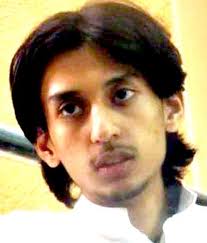
And if that wasn’t disturbing enough, it is being reported
that Interpol was involved.
That makes Julian Assange’s complaints about Sweden wanting
to arrest him for a condom that broke look almost insignificant.
Of course, in theory, Assange could be sent from Sweden to
the U.S. and end up at Gitmo.
Now I see how inconsequential my concerns about porn and
plagiarism are.
Instead of being a method to free the hoi polloi, it will be
more like the magician on the Tosh show who couldn’t break the chain tying him
to a car in time and nearly died when it took off. Those Tweets will lead the
authorities right back to you.
Here is what 23-year-old Hamza Kashgari had Tweeted last
weekend, as reported by the Christian Science Monitor:
On your birthday, I find you wherever I turn. I will say
that I have loved aspects of you, hated others, and could not understand many
more.
On your birthday, I shall not bow to you. I shall not kiss
your hand. Rather, I shall shake it as equals do, and smile at you as you smile
at me. I shall speak to you as a friend, no more.”
Human Rights Watch issued a statement urging Malaysia not to send Kashgari back to the Saudi kingdom.
Users should also be careful of what they say on Facebook unless they want to risk being pulled off a plane in another country. The Saudis have a lot of power.
Thursday, February 9, 2012
Monday, February 6, 2012
Should We Be Worried About Lego Movies
While the world was watching the Social Media animate the
Arab World in real life, there was a dark side. Lego, on the other hand, seems
pretty bright.
Not nearly as violent as the video games my kids play.
As I was updating my Web page on the Columbine Massacre (I
was the leading AP reporter) I couldn’t resist adding the Lego Columbine piece.
It is Danish, a reflection of how Lego movies or clips or whatever they are
know no boundaries.
Tim Burton developed the stop motion animation, among others.
Tim Burton developed the stop motion animation, among others.
There are numerous Lego versions of 127 hours. No one makes
the joke making the rounds about how if you play it backwards it is about a
disabled man who finds an arm in the desert, attaches it, and parties on. Some
certainly are in bad taste, much like life.
Here is what author David Waterhouse had to say about it one
of his many pieces on the Web.
“Things would be so much better if the world was made out of
Lego. Even the worst things about life, like traffic wardens, taxes and
Lorraine Kelly, would be significantly improved if they were made out of little
yellow bricks.
“… And what about terrible films? Could you actually make
something truly awful such as Tim Burton’s Planet Of The Apes remake watchable
by making it purely out of Lego bricks?”
My guess would be yes, though I don’t want to take too much
of the fun out of it by telling you much.
Check them out on the Web, especially on YouTube.
So far I haven’t been able to reach Waterhouse. I am
guessing Lorraine Kelly is a Scottish TV presenter.
But you need to be careful about what you meme. For example,
some are using the word “prestitute” for female news anchors and reporters.
There must be dozens on 127 Hours alone. One of my favorites
is 127 Seconds, when a student gets his arm caught under books. Check it out.
Perhaps the Legos could hook up with the Occupy people and
seize power from our socalled leaders.
Several different versions of what we should do on
particular issues could be made Lego videos and then we could go online and
vote on them.
In the meantime, the CDC should send haz-mat teams into the mainstream media. Viruses are brewing there faster than in designer-beer breweries.
For those of a more traditionally artistic bent, trying this Web site:
http://www.stylelist.com/2012/02/03/craft-of-the-day-napkin-holder_n_1253013.html?ref=stylelist-home&icid=maing-grid10%7Chtmlws-main-bb%7Cdl8%7Csec3_lnk2%26pLid%3D133285
In the meantime, the CDC should send haz-mat teams into the mainstream media. Viruses are brewing there faster than in designer-beer breweries.
For those of a more traditionally artistic bent, trying this Web site:
http://www.stylelist.com/2012/02/03/craft-of-the-day-napkin-holder_n_1253013.html?ref=stylelist-home&icid=maing-grid10%7Chtmlws-main-bb%7Cdl8%7Csec3_lnk2%26pLid%3D133285
MORE Robert Weller stories https://sites.google.com/site/robertweller/rubicon
Subscribe to:
Posts (Atom)